
Why plain HTML components still matter for modern web projects
Frameworks change, but semantic HTML, isolated CSS, and defensive JavaScript remain useful across prototypes, CMS themes, and production applications.
The most reusable frontend component is not the one with the fewest files. It is the one whose structure, styles, behavior, and assumptions can be understood before a team commits to its surrounding toolchain.
Portability begins with an understandable boundary
Plain components expose the browser contract directly: the semantic elements that carry meaning, the CSS selectors that create layout, and the JavaScript that changes state. That visibility makes them useful in static sites, content systems, prototypes, and applications where a framework may be present but should not own every interaction.
Portability does not mean copying one global stylesheet everywhere. A dependable component has a unique root, scoped rules, documented custom properties, and behavior that queries only inside its own boundary. Those constraints let a team translate the component into React, Astro, Vue, a server template, or no framework at all without reverse-engineering hidden dependencies.
The browser already provides a capable component foundation
Buttons, links, inputs, dialogs, details elements, landmarks, and heading relationships already carry keyboard and accessibility behavior. Starting from those primitives reduces the amount of custom state a component must simulate. The result usually survives slow scripts and partial loading better than a generic container that becomes meaningful only after hydration.
CSS now provides grid, container queries, logical properties, cascade layers, color functions, and fluid sizing. Small interactions can use event delegation, custom events, observers, and web components when a stronger boundary is useful. A framework may still improve application state and team workflow, but it is no longer required to make a standalone interface pattern credible.
- Use native semantics before recreating browser behavior with roles.
- Document public custom properties instead of exposing every internal declaration.
- Initialize JavaScript safely when several component instances share one page.
- Keep the initial HTML useful before optional behavior starts.
Framework integration becomes a translation instead of a rewrite
When a component moves into React, the semantic markup and scoped CSS can remain recognizable while React takes ownership of interactive state. In Astro, the same files can render as static HTML with a tiny script for behavior. A clean source package gives the receiving team a known-good baseline against which it can compare the integrated result.
This approach also reduces lock-in for design systems. The documented markup explains the accessibility contract, the CSS records the visual logic, and the script shows the minimum state transitions. Framework wrappers can change over time while the underlying interaction remains testable as a browser feature rather than an artifact of one component API.
Use plain components where ownership and handoff matter
Framework-free source is especially valuable for marketing sections, documentation, embedded tools, CMS themes, prototypes, and cross-team handoffs. Application-heavy controls may still benefit from a framework, but they should preserve the same semantic and styling boundaries. The question is not whether frameworks are useful; it is whether the component can explain itself without one.
A practical evaluation is simple: open the standalone files, disconnect the network, navigate with a keyboard, and inspect every state. Then integrate the component into the target stack and repeat the same checks. If the behavior and meaning survive that journey, the component is portable in the way that actually matters.
Implementation guides
Turn the strategy into reliable frontend code.
These field guides cover the concrete HTML, CSS, JavaScript, accessibility, and integration work behind the decisions in this article.
Working component examples
Inspect the pattern in standalone source.
Open each component to preview its states, customize documented tokens, and download the portable HTML, CSS, and JavaScript package.
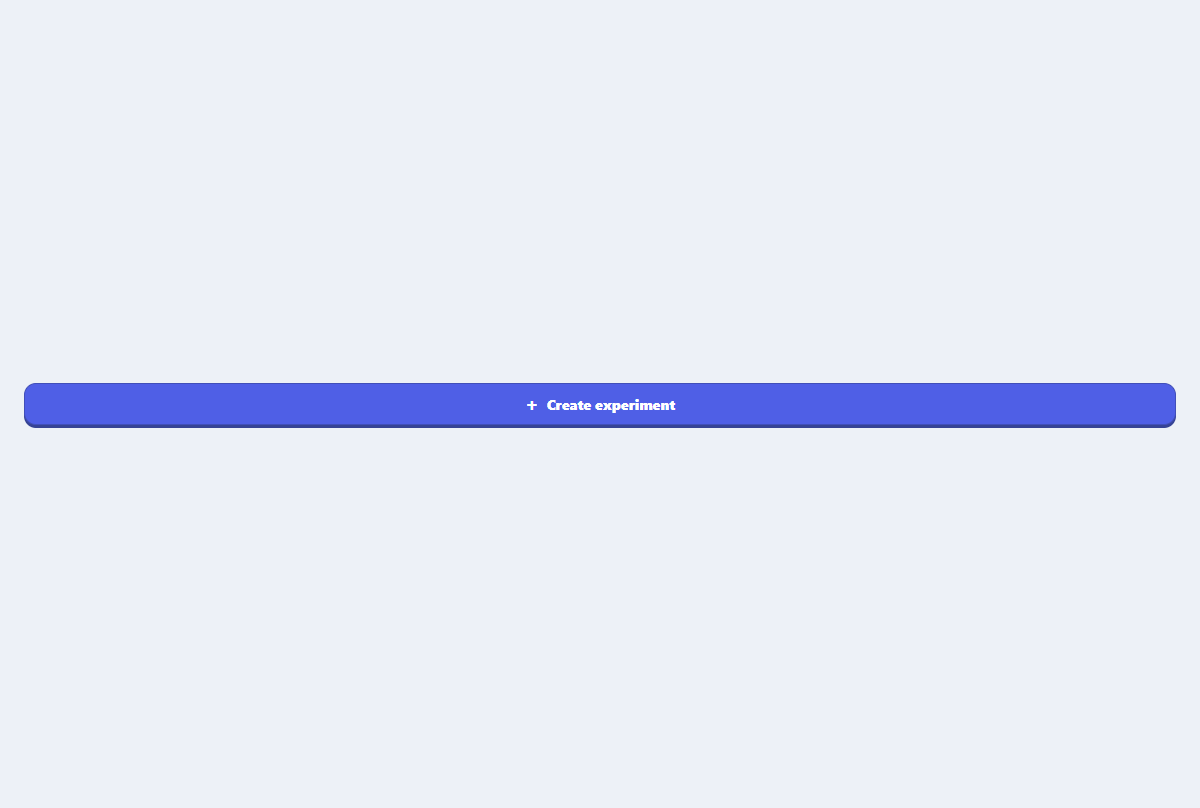
Primary action button
A focused primary button with an icon slot, compact sizing, and clear interaction states.
Open component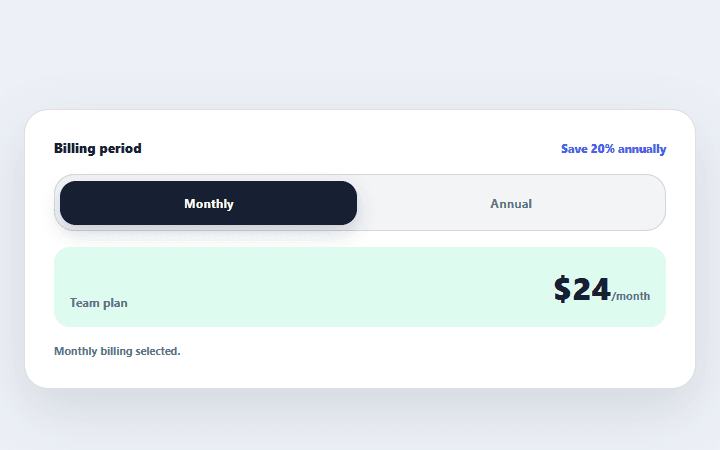
Billing period toggle
A two-option billing control that updates visible prices and announces the selected period.
Open component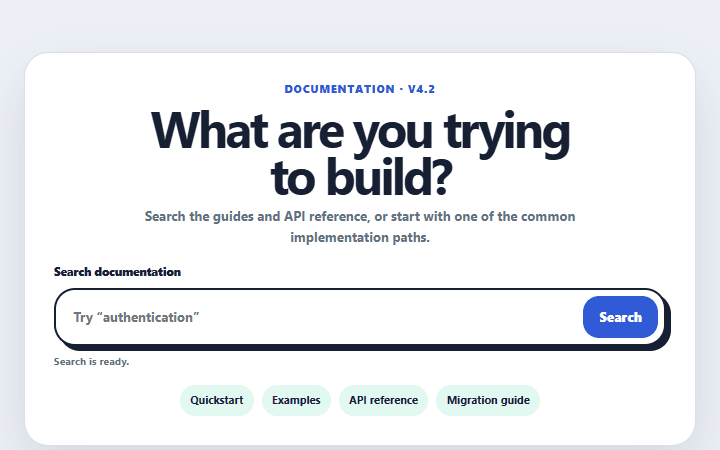
Documentation search hero
A documentation header with a labeled search form, common destinations, and a visible release status.
Open component